Ryan Bogle
Pembrokeshire is a mostly rural, tourist hotspot in the United Kingdom that shows Wales (and the world) at its most stunning. The county features Britain’s smallest city, St. David’s, and longest trail, the Pembrokeshire Coast Path National Trail. Shockingly, it will also soon feature Britain’s first guinea pig farm.
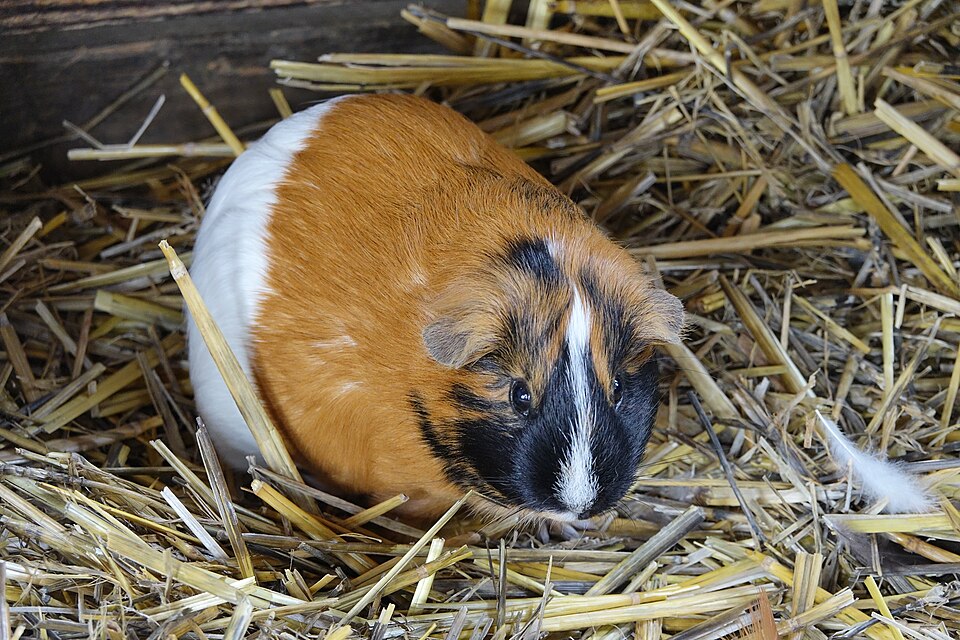
In June 2026, the Planning Committee of Pembrokeshire County Council approved an ‘eco-friendly home to live off-grid’ (Sinclair, 2026) involving the breeding of guinea pigs for meat consumption. Supporting planning documents and speeches by the applicant outlined the guinea pigs’ purpose as a lower-carbon alternative to the consumption of typically-purchased flesh. Furthermore, in this so-called ‘farm’, the guinea pigs would be “larger than the pet variety […] similar to rabbits in terms of meat production”: an urgent ethical problem for vegan sociology.
The ease of species substitution in the guinea pig farm and the redistribution of exploitation and suffering from larger livestock to guinea pigs (rather, turbo guinea pigs), establishes a concerning precedent for reallocating the right to life based on the carbon consequences of its maintenance. More widely, this precedent demonstrates how social movements can fall into neoliberal logics that de-centre sentient life as a collective and consequently reduce environmental thinking solely to the individual, and human, sphere.
Traïni & Throssell (2012) understand the ‘conversion process that led [people] to adopt a diet in accordance with their convictions’ (Ibid: 4) as a transition from having a principle into ‘the notion of career’ (Ibid: 2). In other words, the extent to which these planning applicants are proposing to live according to their convictions makes the commitment as central to their existence as a career. If, as it seems, this guinea pig farm proposal reflects environmental conviction yet nonetheless allows animal consumption, it follows that any environmental conviction or social movement that allows for utilitarian comforts (i.e. animal consumption) cannot provide any logical threshold that disqualifies someone from being morally or environmentally ‘sustainable’, regardless of moral or environmental consequences. As vegan sociologists, therefore, it is our role to both challenge the politics of ‘sustainable living’ as well as dietary environmentalism as part of our opposition to epistemological frameworks that punish animal life.
By arguing for a remodelling of social theory that decenters individualism, both intra- and inter-species, vegan sociology can reap the benefits of a field that bridges theoretical and intellectual discovery with our ethical commitments. We have the opportunity to re-shape how sociology understands human-non-human relations, and occupy the space of a ‘sustainable re-crafting of food practice’ (Twine, 2018: 169), both in terms of moral and environmental sustainability. Detailing the logical inconsistencies and shortfalls within environmental veganism and utilitarian politics creates the space for establishing new frameworks for understanding human relations with the more-than-human world, and the undoing of a social model that reduces the value of the lives of cows, guinea pigs, and humans solely to the carbon footprint of our existence.
References
Sinclair, B. (2026). Guinea pigs to be bred for food by off-grid family after council approval. BBC News. https://www.bbc.co.uk/news/articles/c8r218rxjgpo
Traïni, C., & Throssell, K. (2012). Between disgust and moral indignation: The socio-genesis of an activist practice. Revue Française de Science Politique (English Edition), 62(4), 1–22. http://www.jstor.org/stable/revfranscipoleng.62.4.1
Twine, R. (2018). Materially constituting a sustainable food transition: The case of vegan eating practice. Sociology, 52(1), 166–181. https://www.jstor.org/stable/26558693
Ryan Bogle is an independent researcher of vegan sociology, with a wider focus on social movements and their relationships with corporations. Ryan has a BA in Human, Social and Political Sciences from the University of Cambridge, and an M. Phil in Identities and Cultures of Europe from Trinity College Dublin.